CONTEÚDO EXCLUSIVO
Confira nossos planos especiais de assinatura e desbloqueie agora!
Ops! Esta questão ainda não tem resolução em texto.
Ops! Esta questão ainda não tem resolução em vídeo.
Questões Relacionadas
EC Charges Two Investment Advisers with Making False and Misleading Statements About Their Use of Artificial Intelligence
The Securities and Exchange Commission today announced settled charges against two investment advisers, Delphia (USA) Inc. and Global Predictions Inc., for making false and misleading statements about their purported use of artificial intelligence (AI). The firms agreed to settle the SEC’s charges and pay $400,000 in total civil penalties.
“We find that Delphia and Global Predictions marketed to their clients and prospective clients that they were using AI in certain ways when, in fact, they were not,” said SEC Chair Gary Gensler. “We’ve seen time and again that when new …
Securities and Exchange Commission (SEC)
The Securities and Exchange Commission oversees securities exchanges, securities brokers and dealers, investment advisors, and mutual funds in an effort to promote fair dealing, the disclosure of important market information, and to prevent fraud.
Source: https://www.usa.gov/agencies/securities-and-exchange-commission
SECURITIES AND EXCHANGE COMMISSION
Supplemental Standards of Ethical Conduct for Members and Employees of the Securities and Exchange Commission
II. Description of Final Rule Amendments
A. Prohibited Ownership of Financial Industry Sector Funds
The Commission proposed amending § 4401.102(c)(1) to explicitly prohibit employee ownership…
Text I
According to Jordão (2016: 193), “A language is always a contested site, a dialogical space where people construct meanings, identities, knowledges, and are also constructed by the associations, links, relations made among meanings; such meanings and relations are, in turn, loci where identities are performed”.
(In Jordão, C.M. Decolonizing identities: English for internationalization in a Brazilian university. Interfaces Brasil/Canadá. Canoas, v. 16, n. 1, 2016, p. 191–209).
Text II
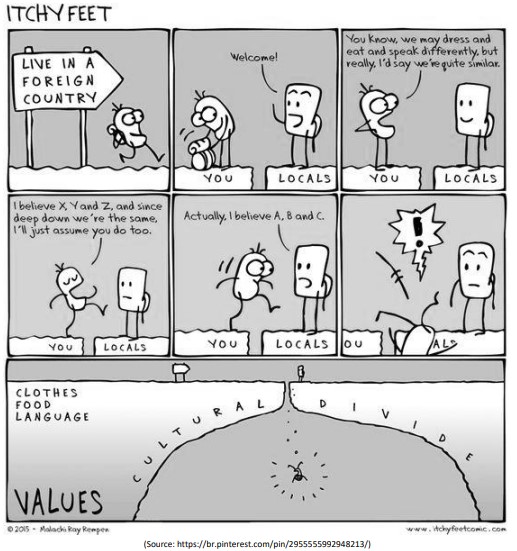
Having read Texts I and II, write a text in English (150 to 200 words or 20 lines) in which you:
1. Explain the theoretical perspective of the quotation.
2. Illustrate this perspective by suggesting a st…